

The Craft Link Most Writers Miss
It’s not about genre. It’s about promise.

If you’re new here, I’m Kristen — a former Big 5 editor turned freelance developmental editor specializing in crime fiction and romance. I’m really glad you found your way here.
I started this newsletter to make publishing feel less opaque — and more usable. There are 150+ archived articles. All free. All practical. All shaped by my years on the acquisition side of the desk.
That library exists because of my paid subscribers. Their support makes writing this newsletter more than a labor of love. It makes it sustainable. And all writers deserve to be paid for their work. Editors included. I’m deeply grateful for all of the subscribers who make this possible.
If this space steadies you or sharpens your work, please stay. Whether you are here as a visitor, free, or paid subscriber, I would love to play a small part in helping your writing succeed. And if there’s something specific you want covered, reach out. If you’re wondering about it, other writers are too.
Today’s article explains why I focus on editing crime and romance — and what those genres taught me about stakes, pacing, and survival.
I edit both romance and crime fiction for the same reason I learned to love books in the first place: they taught me how to survive.
I came to books through darkness.
I was an undiagnosed autistic kid, a bookworm, and often trying to make sense of a world that felt loud, unpredictable, and unsafe. I didn’t always have the language for what I was experiencing, and I certainly didn’t have a guidebook for how to be a person in it. But I had books. And books became my way of learning the rules—emotional, social, existential—that everyone else seemed to naturally understand.
Crime fiction was the first genre that truly saved me. I read obsessively, starting with A Is for Alibi by Sue Grafton—the very first book I checked out after I graduated to the adult section of my local library—and it cracked something open. That book didn’t just introduce me to a genre; it opened a gateway. It showed me that the world could be chaotic and cruel, but that chaos wasn’t meaningless. There were patterns. There was truth. There was a way to follow the clues, to name what went wrong, and to put the pieces back together. Even when things fell apart, there was logic underneath the mess.
At a time when my own life felt heavy and overwhelming, crime fiction showed me that darkness didn’t have to be the end of the story. There could still be agency. Understanding. Hope.
Then I moved to Los Angeles. And suddenly there was light everywhere. Literal sunshine. Blue skies I couldn’t avoid even if I tried. Even though the streets felt familiar — I’d grown up reading about them through the adventures of Harry Bosch, Elvis Cole and Joe Pike, and Dr. Alex Delaware — it was a borrowed knowing. The city still felt lonely, and I needed more. I found myself wanting something warmer, softer, more openly hopeful.
Around the same time, one of my authors wanted to make the leap from writing thrillers to writing romance. We learned together. How emotional stakes work differently. How vulnerability can be just as powerful as danger
It also showed me that love could be a lifeline. That connection wasn’t just something other people figured out effortlessly—it was something you could learn, practice, and grow into. People could find each other even when they were misunderstood, guarded, or afraid. That happy endings weren’t about perfection, but about choosing to stay.
Romance is emotional chaos. Crime is external chaos. But they make the same promise I needed most as a kid and still believe in now: that the story will come together in the end. That there is an ending where things make sense, even if the journey there is fraught, messy, and hard-won.
Now I live in both worlds.
I spend my days half in the light and half in the darkness, alternating between romance and crime fiction—sometimes hour to hour. I believe deeply in both. In stories that sit with fear and uncertainty. And in stories that insist on connection, joy, and love anyway. They aren’t opposites to me. They’re two sides of the same survival instinct.
That’s why I edit both. Because I know what it feels like to need a story that reassures you there will be an ending. That meaning can be made, that understanding is possible, that you won’t be left alone in the dark. And I love helping writers build toward that moment, page by page.
What books are your touchstones? The ones that quietly (or loudly) turned you into the person and writer you are today? I’d love to hear about them in the comments.
Warmly,

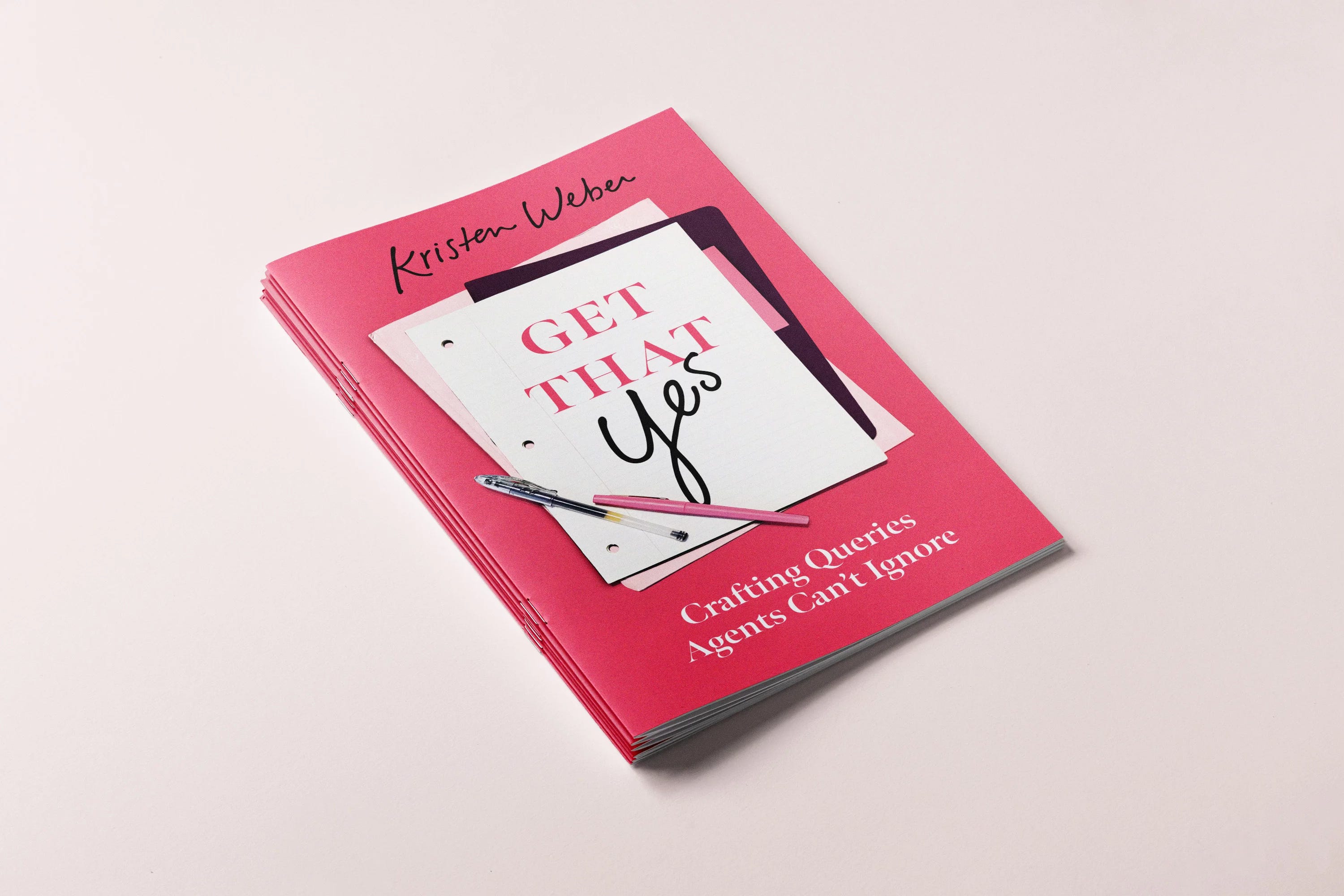
Upgrade your subscription to unlock my full guide, Get That Yes: Crafting Queries Agents Can’t Ignore—free and available instantly. You can also purchase it on its own for $3. And stay tuned for next month’s guide on writing a synopsis. Upgrade now, and you’ll get both.
What a beautiful, honest piece. ❤️🥰🫶🏻
A is for Alibi by Sue Grafton inspired me to write crime fiction. I can see how Kinsey Millhone might help you.